|
||||||
|
April 16, 2008
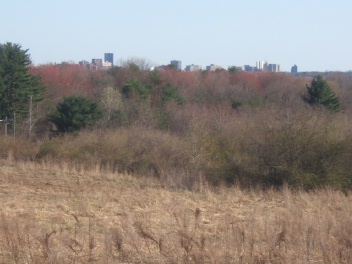
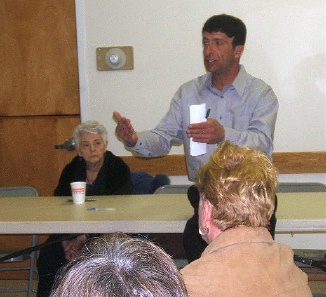
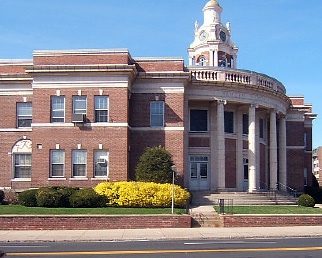
Saving the Farm By Sharon Bass The New York developer who for years fought the town to build 72 homes on the Maselli Farm -- and triumphed in court in '06 -- decided over a year ago to scratch the project, after all, because of the weakening real-estate market. That was good news to neighbors of the Gilbert Avenue farm. But delayed news. They say they only recently learned that the developer backed out and are trying, again, to rescue the farm to keep it in its natural state. (Click here for background story.) “Now that I’m finding out that this is over a year old, it would have been nice of the town to tell us the deal had fallen through and the land was now available,” said Bill Burns, president of the Dunbar Hill Civic Association. “We could have started the process for open space sooner.” Norman Greenberg, vice president of Pleasantville, N.Y.-based Baker Residential, the developer, said a decision was made more than a year ago to give up on the subdivision because of the soft market. “We have a number of sites we’re sitting on and we didn’t want to sit on all of them,” while waiting for the market to turn, he said. Councilman Mike Colaiacovo, who represents the 7th District where the farm is, said he recently learned that Baker pulled out. “I was very excited for the neighborhood,” he said. Burns said he had been asking Mayor Craig Henrici since last fall about the disposition of the subdivision. Hamden land-use commissions had denied Baker’s project in 2006. The developer then took the town to court where it got a favorable ruling. The plan seemed to be a go. “Henrici was questioned by us and others [at a Dunbar Hill meeting in October 2007] as to the negotiations with Baker. We kept pressing it and Henrici would just keep saying, ‘Things are looking better and they are looking better than they were a year ago,’” said Burns. “He said he couldn’t talk about it. This was right before the election.” Baker never purchased the land, which is still owned by the Maselli family, who could not be reached for comment. Henrici does not return messages from the HDN. The civic association and other neighbors opposed to the farm being developed (they also fought the new middle school from being built there) presented their case at the Natural Resources & Open Space Commission’s March 26 meeting. Burns said the Maselli Farm is now on the commission’s list of desirable lands to acquire for open space. “I’m happy and looking forward to trying to strike a deal between the Masellis and the state and the town to purchase that land,” said Burns. “It’s the last vestige of pristine land in the southern part of the town.” Like others, he said he wants just open space and farming. “No ball fields. No schools. Open space. Sit on a bench and look at the New Haven harbor and skyline. The only place you can see it clearly [in Hamden] is from the top part of the Maselli land,” said Burns. Assistant Town Planner Dan Kops said he believes he first learned of Baker pulling out some time last year. And he said he’s “not aware of any interest in the property.” “I heard they weren’t going to do it. I don’t know if they sent something in writing or not. I don’t think they did,” said Kops. But, he said, Baker didn’t have to give the town notification -- not for five years. “By state law, developers have five years to complete [the infrastructure, but not necessarily the homes], and if they haven’t done anything in five years, then it can be declared null and void,” the assistant planner said. “They don’t have to contact the town if they’re not doing the project. There’s nothing to force them to.” “I sort of wish the market was strong enough so we could rationalize doing it,” said Greenberg. “I think it’s a terrific project that would be good for the neighborhood. Good for the town. When you bring in new housing in a neighborhood of that type, it’s going to raise the values of the [existing] homes. It has great views. It has sewer and water. I mean it’s a terrific development.” March 11, 2008 Police Station Squabble By Sharon Bass At the Dunbar Hill Civic Association’s monthly meeting last night, the neighborhood was barely discussed. Same with the upcoming town budget, which was on the agenda. Instead the time and emotion went to the location of the new police headquarters. Some insisted it was a done deal. Others weren’t quite buying it. 7th District Councilman Mike Colaiacovo moderated the group of 16 residents including three councilmen, answering questions and at times motioning for peace when things got hot. Marianna D’Albis, an opponent of the administration’s plan to build the police station attached to Memorial Town Hall, called the site choice “a campaign issue.” Mayor Henrici announced the decision shortly before the November election. D’Albis said the mayor, his confidante Councilman Matt Fitch and Council Prez Al Gorman chose the site. Police Commissioner Meg Nowacki shot back: “You’d better be careful who you name." “If you have an agenda and you don’t like [the site], that’s one thing,” Councilman Jack Kennelly, a member of the Town Building Committee which is overseeing the police project, said to D’Albis. “But look at the needs of the police station. It’s so frustrating to hear statements like yours.” Kennelly similarly challenged Sarah Morrill, of the Republican Town Committee, when she too expressed concerns about the chosen location. Morrill, D’Albis and others asked if traffic studies at Whitney and Dixwell were done before the site was picked. If the police building could instead be built with the new fire headquarters on the Dadio Farm. If other sites were considered. If other sites could be considered. But Kennelly said it’s a done deal. “The charge [of the TBC] was not to reinvent the wheel and start from day one,” he said. “Our charge is the construction.” In fact. A resident-elect member was kicked off the committee after her first meeting because she voiced opposition to the location. (Click here to read Michele Helou’s story.) “I don’t think it’s up to the public where it goes,” said Michele Mastropetre, a civic association officer. “It’s up to the experts, like the police. They’re the ones who know what functions and functions best.” “Then they should make all the decisions,” Jack McCray quipped. “Why are we sitting here?” Colaiacovo made a motion to cancel April’s civic association meeting so folks could attend the public hearing on the 2008-2009 town budget on April 8 at 7 p.m., and the school tab the next evening at 7, both at Memorial Town Hall. No one disagreed. September 21, 2007 Newhall Revolution Community activists plan to take on the DEP; GA passes Newhall bonding bill last night By Sharon Bass It was business as usual at last night’s Newhall Advisory Committee meeting. And that was quite apparently not a good thing. For seven years, the residents of the southern Hamden neighborhood have been asking the state for a reasonable solution to the contamination underneath their homes, parks and the old middle school caused by decades of dumping junk there. And state Department of Environmental Protection officials told NAC members basically the same thing as they have for years about their commissioner’s final remediation plan. They had no specifics. Business as usual “We’re very ready to present the plan,” said Robert Bell, assistant director of the DEP’s remediation division. But when asked for details -- when the plan will be done, what’s in the plan -- Bell said he couldn’t divulge any. And the committee seemed to have emerged from its restlessness stage and entered the fighting mode. Acting committee chair and neighborhood activist Elizabeth Hayes said she’s not going to wait for the state any longer. She’s organizing a protest in Hamden against the DEP. “We’re going to have a massive rally in October against the DEP and Olin [Corporation; another party financially responsible for the remediation] for the discriminatory practice against the residents in Newhall,” Hayes said after the meeting at the Keefe Center. “It’s blatant environmental racism.” Before the early-October rally, she said she’s participating in a conference in Boston with the D.C.-based Environmental Law Institute, from Oct. 2-Oct.4. Hayes said that will help prepare her for the protest. At the conference she will learn the laws pertaining to brown fields and their redevelopment. “I’ll learn how to get the DEP to clean up this area,” she said. Back at the meeting “Enlighten us on what you’ve done if anything?” NAC member Henry Blue said to Bell and Pat Bowe, also a DEP official. “We’ve reviewed the public comments and some of the comments had us revise the plan,” said Bell. The comment period was for residents to submit ideas for the cleanup and the structurally damaged homes. The deadline was last November. In August 2006, Commissioner Gina McCarthy presented a remediation proposal to the public at Southern Connecticut State University. There were a number of provisions the neighborhood firmly disagreed with -- such as not removing all the tainted soil and slapping those properties with land-use restrictions, which can devalue them -- and soundly rejected McCarthy’s suggested plan. The one that’s supposed to be unveiled this year is a final plan, according to the DEP. It’s unclear what would happen if the community rejects this one, too. “You really don’t know anything, then?” challenged Blue. “Is that what you’re trying to tell us?” “That’s right,” said Bell. “Can you tell us an exact date" for the final plan to be revealed? Blue asked. “It will be in 2007. It should be very soon,” said Bell. Hot from Hartford Hayes told the committee that the General Assembly was to vote on two bonding bills last night for the remediation. Under a 2003 consent order, the state and Olin are to each pay half the cost of the residential cleanup, which has been estimated at anywhere from $80 million to over $100 million in total. “The bill is expected to be approved today by both houses,” said Hayes. “Suppose the bill is turned down?” asked Blue. “I have no knowledge of what’s going on in Hartford at the moment,” said DEP’s Bowe. Around 8:30 p.m. Thursday, the Senate Democrats issued a press release saying the General Assembly approved a Newhall bonding bill for a total of $5 million over the next two fiscal year (2007-’08 and 2008-’09). It will be used to start rehabbing or dismantling the 25 to 30 houses that are extremely damaged due to the shifting landfill below, and to relocate those families. The provision states more funds will be made available after '09 to continue the job, but doesn't specify how the money will be assured. The bill still needs Gov. Jodi Rell's signature and approval from the state Bond Commission. A second bonding bill the Legislature took up last night was for $14 million over the next two years, to start the soil remediation. There was no word about that piece of legislation in the press release. In May, according to a memo written to NAC from state Rep. Peter Villano (D-Hamden), the Senate approved a bill addressing the commissioner's final remediation plan, but the House didn’t act on it. “Introduced by Sens. Looney and Crisco and myself it required as its principal objective that [DEP] Commissioner McCarthy decide on a final clean-up plan within 90 days of passage, in effect by October 1, 2007. It also required her to base her plan on NAC recommendations and to give priority attention to acquisition of homes with severe structural damage,” the state rep wrote. Another piece of the proposed legislation “would allow any municipality to abate up to 30% of property taxes due on property subject to a DEP remediation Consent Order.” The House subsequently passed the bill as a substitute for another environmental piece of legislation, and then it got sent back to the Senate, where it eventually died. Back at the meeting Bowe was asked if the DEP was holding back on disclosing its cleanup plan until the Legislature voted on the funding bill. He said no. The soil contamination was discovered in 2000 when the old middle school was being prepped for expansion. There's been ongoing disagreement about whether the contamination can cause health problems, such as mental-development delays in children. While the state insists a fairly extensive and expansive cleanup is needed, others involved say nothing needs to be done except fix the dilapidated homes. NAC member Henry Platt asked if his committee will get to see the DEP plan before the public does. Neither Bell nor Bowe responded. “We thought we’d have the report in front of us to look at” at least 10 days before the public, said Platt. Hayes said she expects the final document by next month, around the time she's staging her protest rally, and is planning a public forum in November to discuss Commissioner McCarthy’s work. “I think the residents have waited long enough and the DEP needs to get off the pot,” said Hayes. Asked why they think the DEP is purposely stalling, Hayes and Blue said they’re suspicious about an industrial development taking over Newhall and knocking down their homes. “There have been strangers in the community,” said Hayes. “Middle-age white men riding on bicycles doing an assessment of the area.” “They stop and look around and then may go back a block and look around again,” said Blue. “The DEP, short of doing nothing, is trying to find the cheapest way out,” said Hayes. “We’re still at the beginning of the whole affair. It’s like nothing has been done,” Blue lamented. “They don’t want to do it. I think they have other plans for the neighborhood.” August 27, 2007 If Not For You Story and visuals by Sharon Bass In 1996, the Cherry Ann Street Double Block Watch Association was born. The mother of the association, Connie Vereen, had just moved from New Haven to that street, thinking she was solidly in Hamden. She soon learned differently. While she moved to Hamden, all right, directly across the street -- on her street -- is New Haven. And so Vereen gave birth to the peace and crime-reduction effort, to try to bring both sides together to live in harmony.
“That’s where it begins. In front of your home,” Vereen said last Saturday during her annual double-block watch party. “I do a lot trying to take the neighborhood back. It has gotten 100 percent better.”
She’s gotten many of the 70 kids who live on both sides of her dead-end block involved, and Hamden police have given much praise to Vereen’s tireless effort. She has five dedicated co-captains on her watch. Three from each town. “Being a block watch captain helps police because the more you deal with your neighbors the less controversy and the less need for police,” said Vereen, 57, who just received her first great grandchild.
Dorothy Moye is a New Haven captain. Under Saturday’s overcast sky with a huge humidity factor, she manned the grill, making dogs and burgers. “I also made the soul food,” she said. The block watch “is something enjoyable to do because I love kids and I like being a parent of the neighborhood,” Moye said. She has two birth children, three adopted and six grandchildren. Everything is free at Vereen’s party. The food, the beverages and the music, spun by DJ Trite Good. He shows up every year as do most others. But this year Vereen said the show almost didn’t go on. The cupboard was pretty bare.
Enter Charles Bryant, owner of Chazmo’s Café, just up the street on Dixwell. He typically provides the ice. This time however, knowing Vereen’s financial predicament, he held a fundraiser at his bar and took in $500 for the Hamden/New Haven street party. “Everybody knows Connie,” said Bryant. Families from all over Hamden came to the fundraiser, he said. “Because of the block watch, the area is cleaner up street on Dixwell.” And he appreciates that for his business. Vereen, a member of the town’s Green & Clean Commission, organizes an annual street cleanup and said she gets together with the neighborhood children -- in her driveway or in her house -- to talk about staying safe.
|
||||||
Copyright© 2005
Hamden Daily News Site designed by Joanne Kittredge |

|
|||||